


Яблоко часто встречается в русских народных сказках, песнях, обрядах и других произведениях фольклора. Образ этого плода настолько прочно вошёл в русскую культуру, что сегодня мы воспринимаем его как привычную и хорошо знакомую часть национальной традиции. Но за этим простым образом стоит целый пласт символических значений.
Что же символизировало яблоко в русской традиции?
Яблоко связывали с плодородием, здоровьем, любовью, красотой и семейным благополучием. Оно также было связано с брачным союзом и рождением здорового потомства. Плоды яблони, её ветви и цветы использовались в свадебных обрядах и имели особое символическое значение.
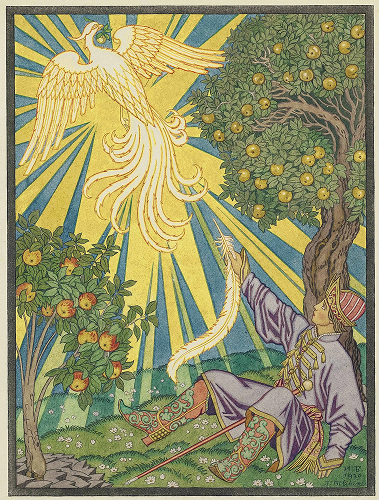
Illustration for the fairy tale “Tsarevich Ivan and the Firebird” by I. Y. Bilibin
The image of the apple accompanies us from childhood. We encounter it in Russian folk fairy tales and literary works: in “Tiny-Havroshechka”, Alexander Pushkin’s “The Tale of the Dead Princess and the Seven Knights”, and Vladimir Suteev’s “A Bag of Apples”. In Russian classical literature, apples become an independent artistic motif—one need only recall Ivan Bunin’s “Antonov Apples”.
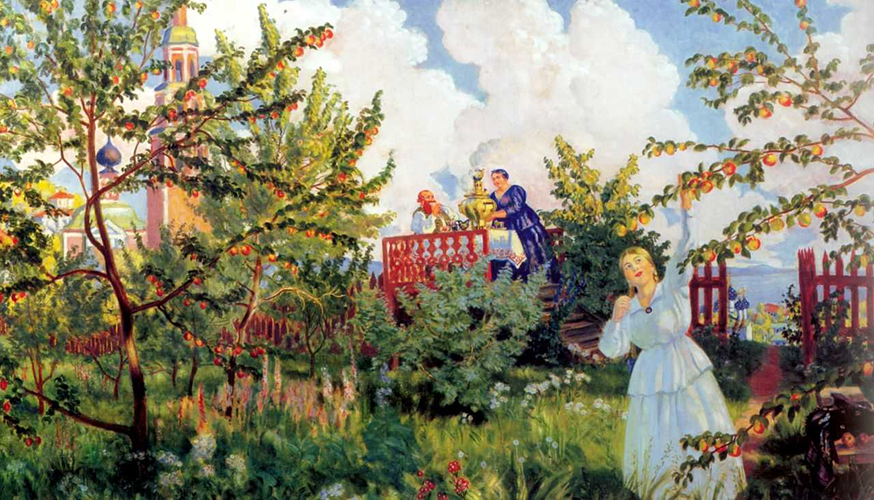
«Apple Orchard» Boris Kustodiev
Apple orchards and blooming apple trees inspired Russian painters, including Boris Kustodiev. The apple motif also found its place in folk handicrafts: apple trees and apples became one of the traditional motifs of Russian lacquer miniature art, and craftsmen created trinket boxes and decorative items shaped like apples.
At the masterclass, we invite you to look at the familiar image of the apple from a new perspective: discover its meaning and depiction in Russian folk art, and then try your hand at painting to create your own decorative piece.
Registration is required.
If for any reason you are unable to attend the workshop, please let us know at: biblio@rushouse.be
Age: 8+
Event language: Russian
