



Nikolai Mikhailovich Karamzin is one of the pivotal figures of late 18th and early 19th-century Russian literature. A writer, poet, journalist, and historian—author of the monumental 12-volume History of the Russian State—he entered history as one of the founding fathers of Russian Sentimentalism. His name is inextricably linked with Simbirsk (known today as Ulyanovsk), the city where he spent his childhood and youth, and which played a crucial role in his intellectual formation.
The exact date and place of Karamzin’s birth remain a subject of academic debate. The Great Russian Encyclopedia cites several versions connecting his birth to the Simbirsk Governorate. However, it is well established that he spent his childhood on his father’s estate in the village of Znamenskoye, located in the Simbirsk region.
The future writer received his primary education in Simbirsk at a private boarding school run by a Frenchman named Pierre Fauvel, before continuing his studies in Moscow. Thus, Simbirsk was the very first cradle of Karamzin’s broad intellectual and literary interests.
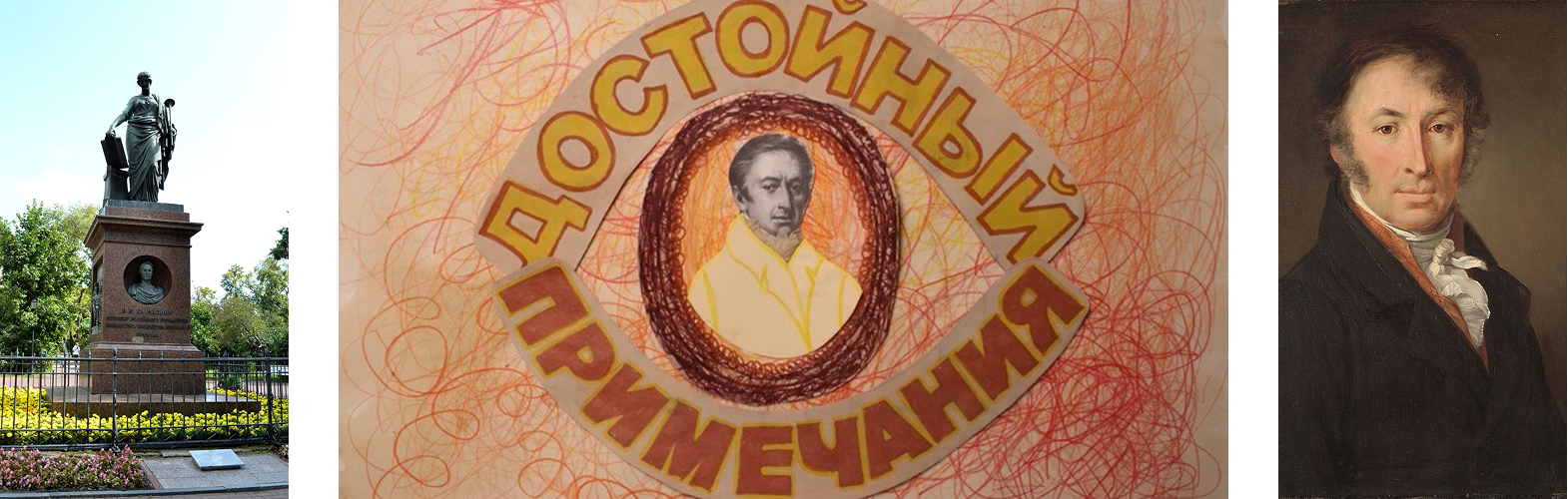
Monument to Karamzin in Ulyanovsk
The cultural atmosphere of Simbirsk played a defining role in his destiny. After his father’s passing and his own military retirement in 1784, Karamzin returned to Simbirsk. There, he joined the Masonic Lodge of the Golden Crown, founded by the prominent local landowner Ivan Turgenev. The connections he forged during this period eventually paved the way for his move to Moscow and his integration into the influential literary and Enlightenment circle of Nikolai Novikov.
Above all, Karamzin’s name is celebrated for pioneering Russian Sentimentalism—a literary movement centered on the inner world, emotional life, and psychological depth of the individual.
His most famous masterpiece, the novella Poor Liza (Bednaya Liza), was published in 1792 in the Moscow Journal, which Karamzin edited himself at around 25 years of age. It was this work that brought him nationwide fame.

Participants could also join the salon via Zoom.
The novella tells the story of a tragic romance between Liza, a peasant girl, and Erast, a young nobleman. Their relationship is doomed from the start due to social inequality and Erast’s weakness of character in the face of life’s hardships. The tragic climax is not merely a personal heartbreak, but the outcome of a moral failing—a betrayal of trust.
Karamzin paints the characters’ emotions dynamically, prioritizing their inner psychological state. For this reason, Poor Liza is regarded as the first Russian psychological novella. It addresses timeless themes: love, moral responsibility, social barriers, and the innate value of human feelings regardless of social class.
Upcoming Event Announcement
Our next Literary Salon will take place on October 15 at 17:00, dedicated to the life and works of Evgeny Schwartz.
🔗 Details & Registration: Evgeny Schwartz
