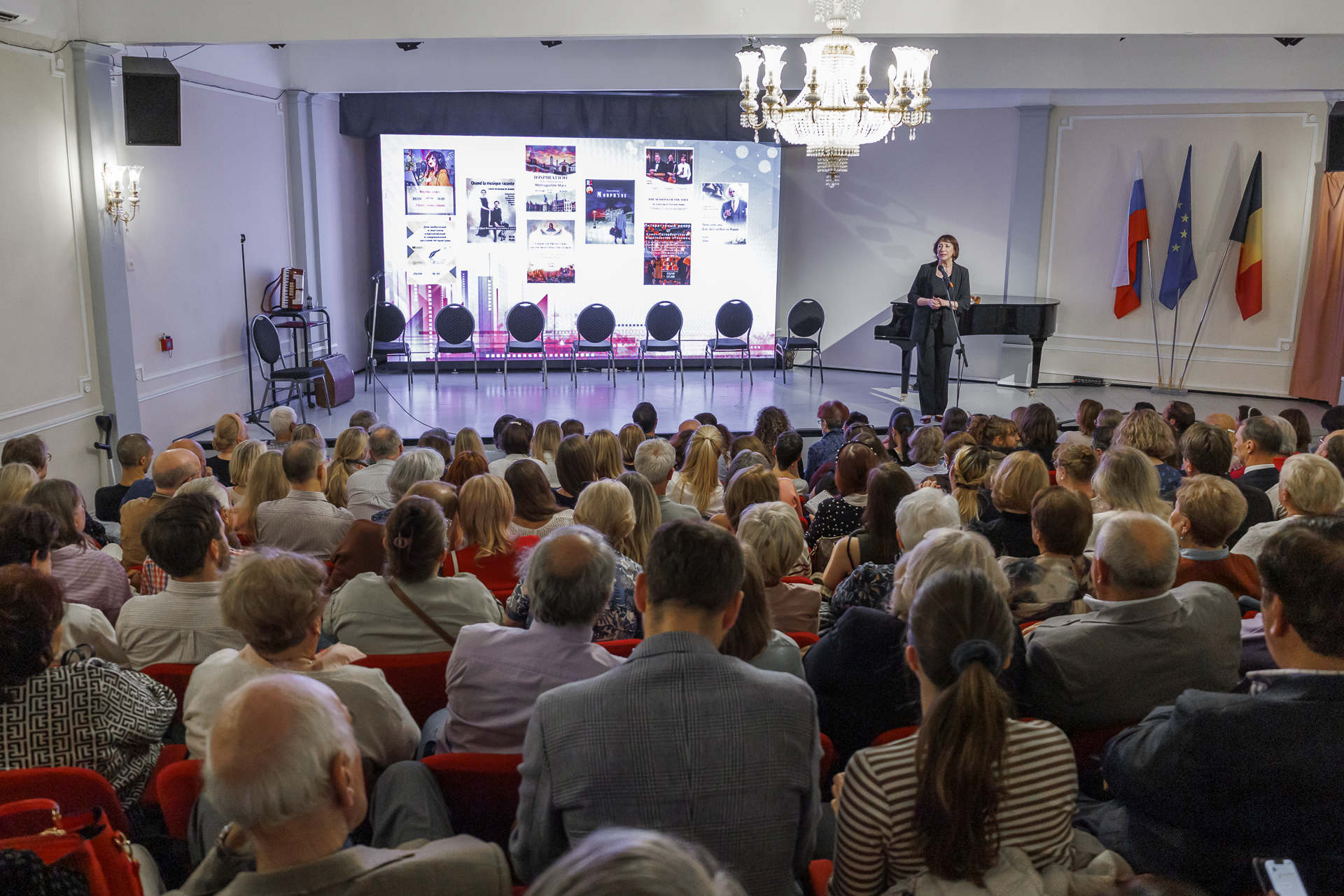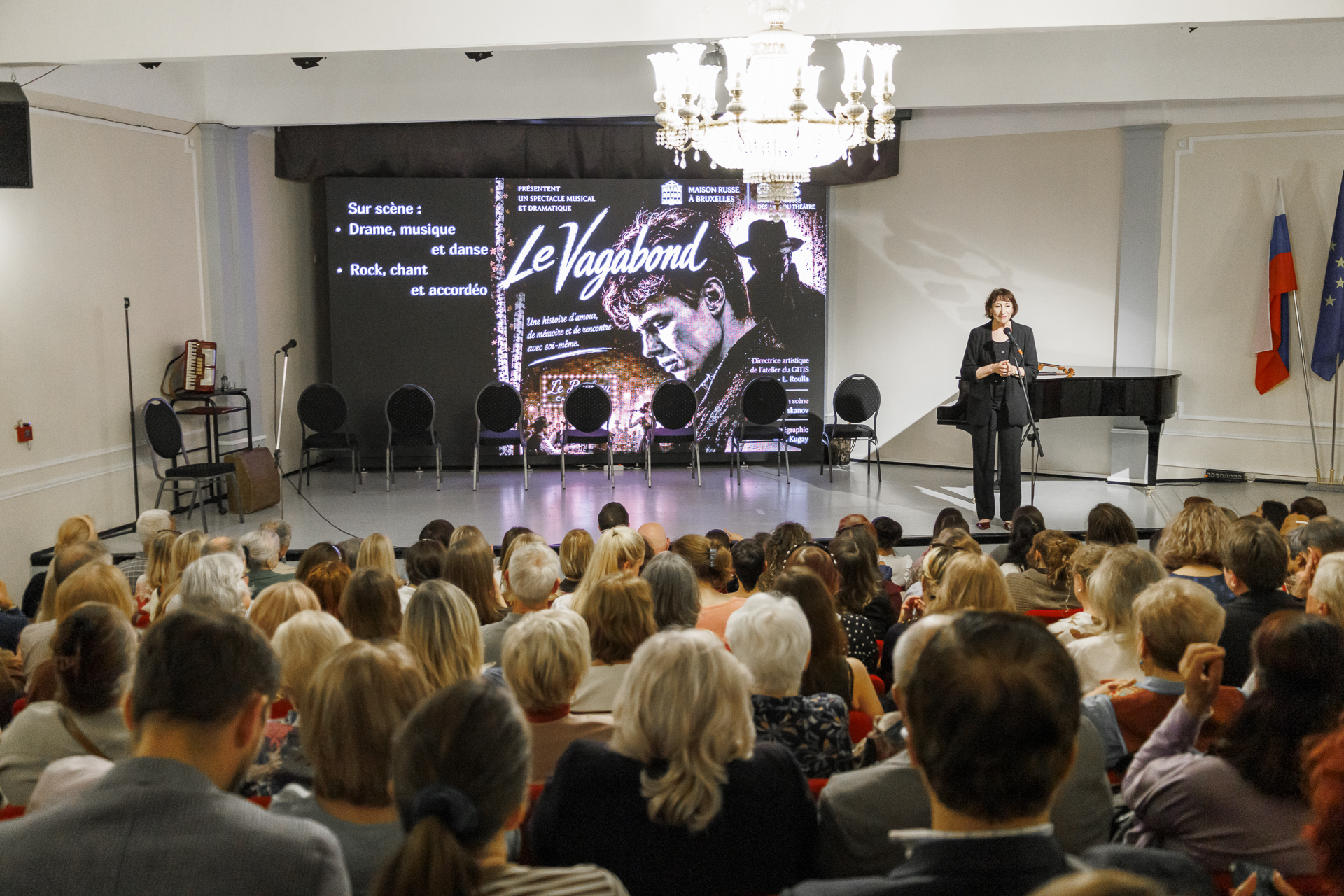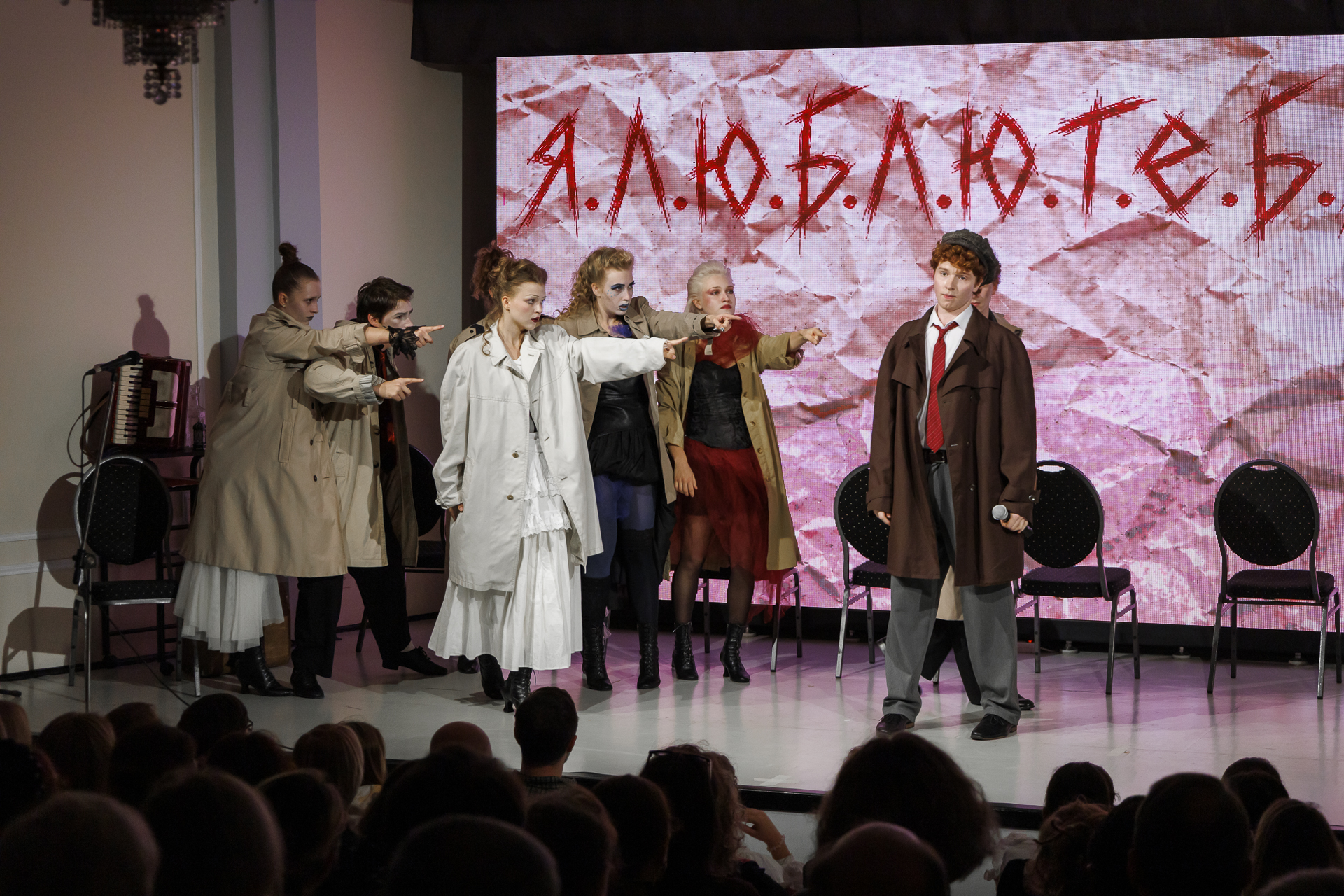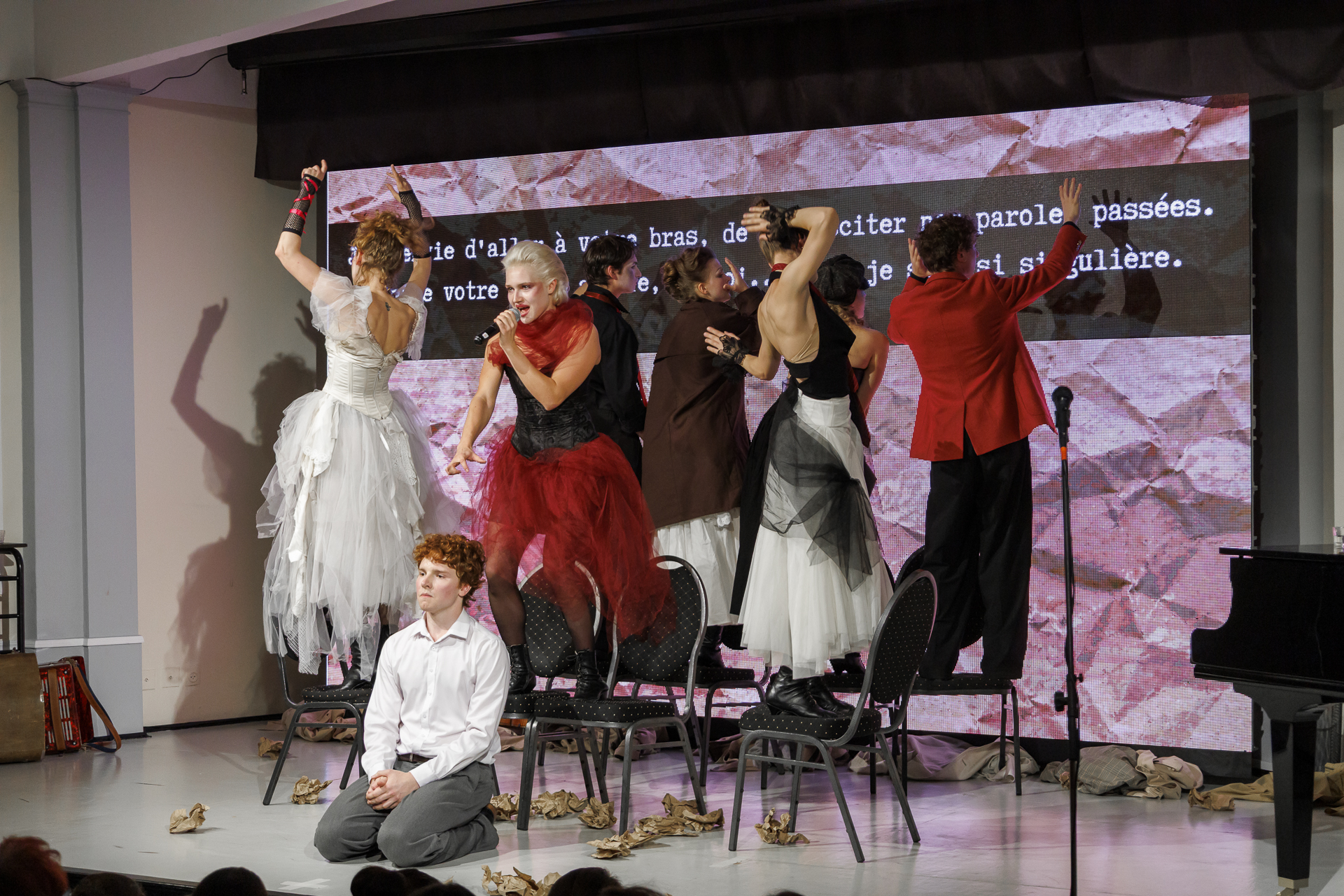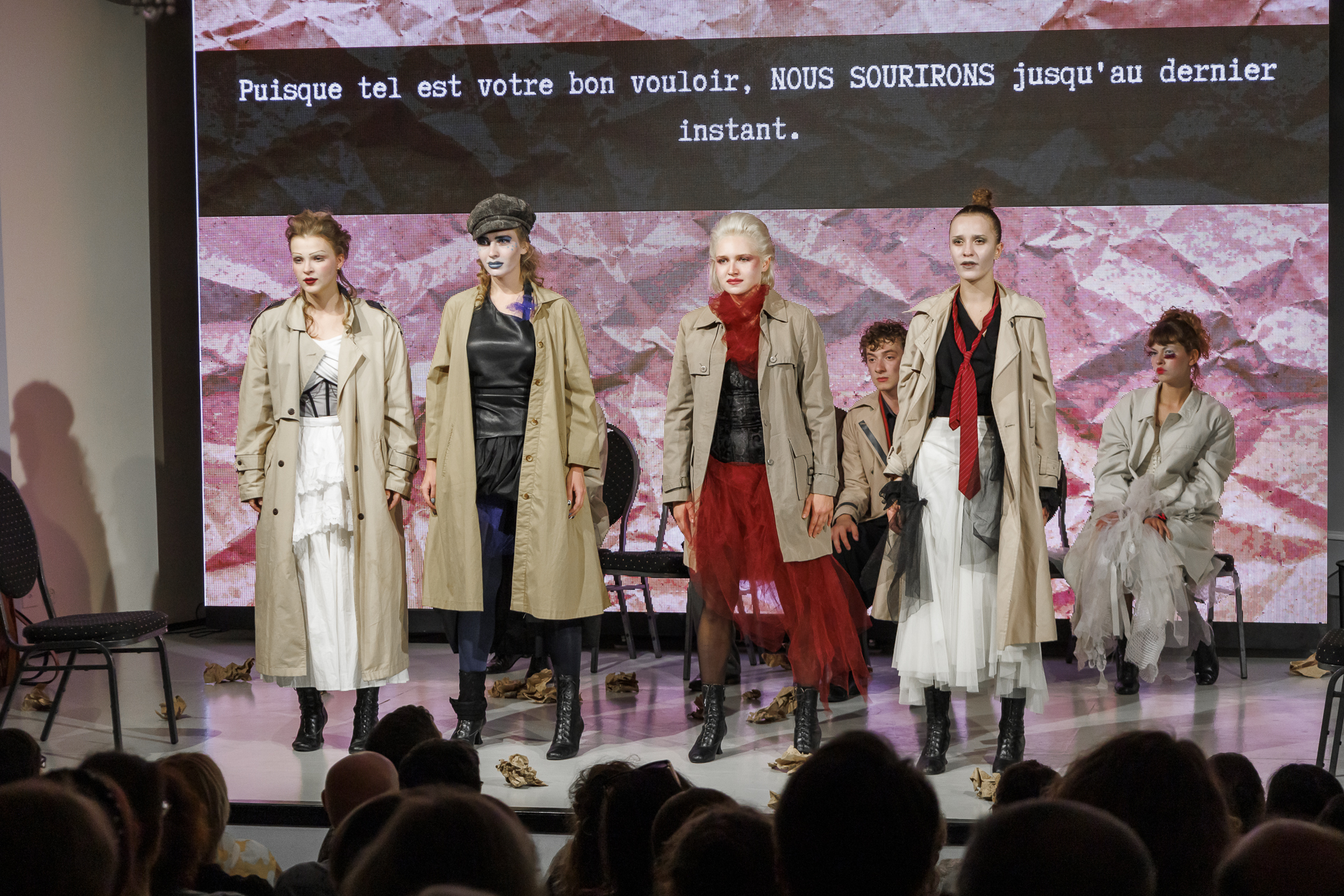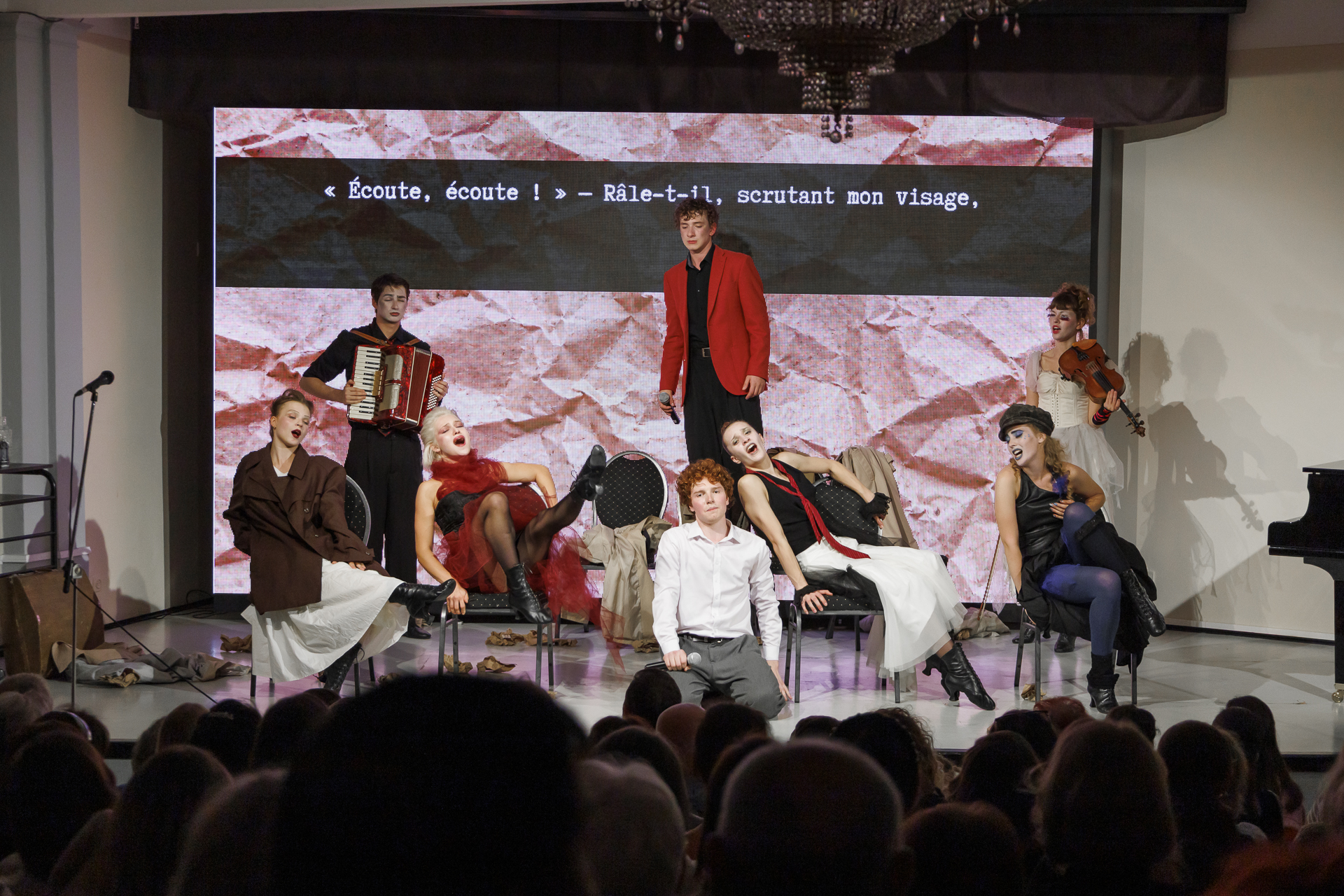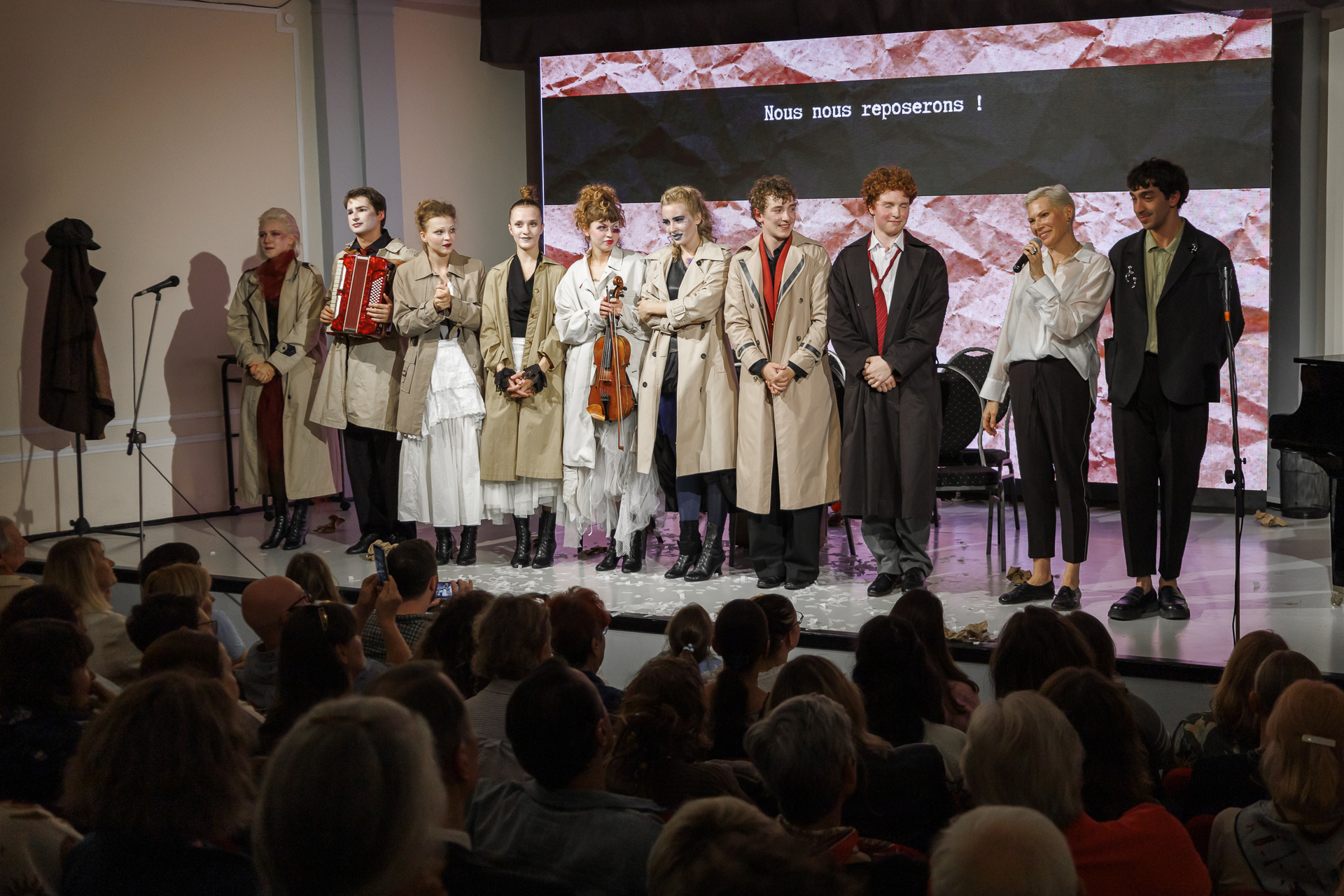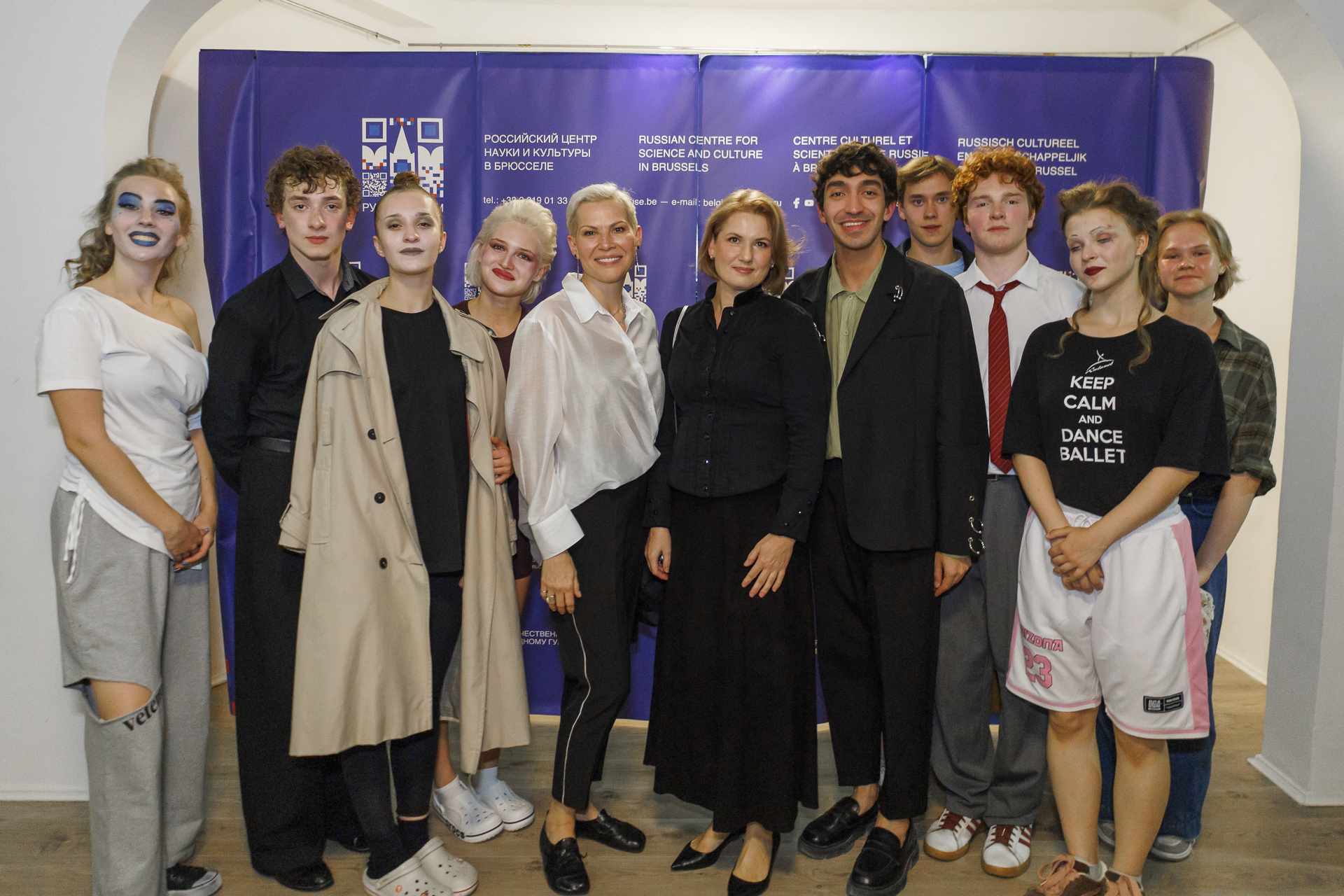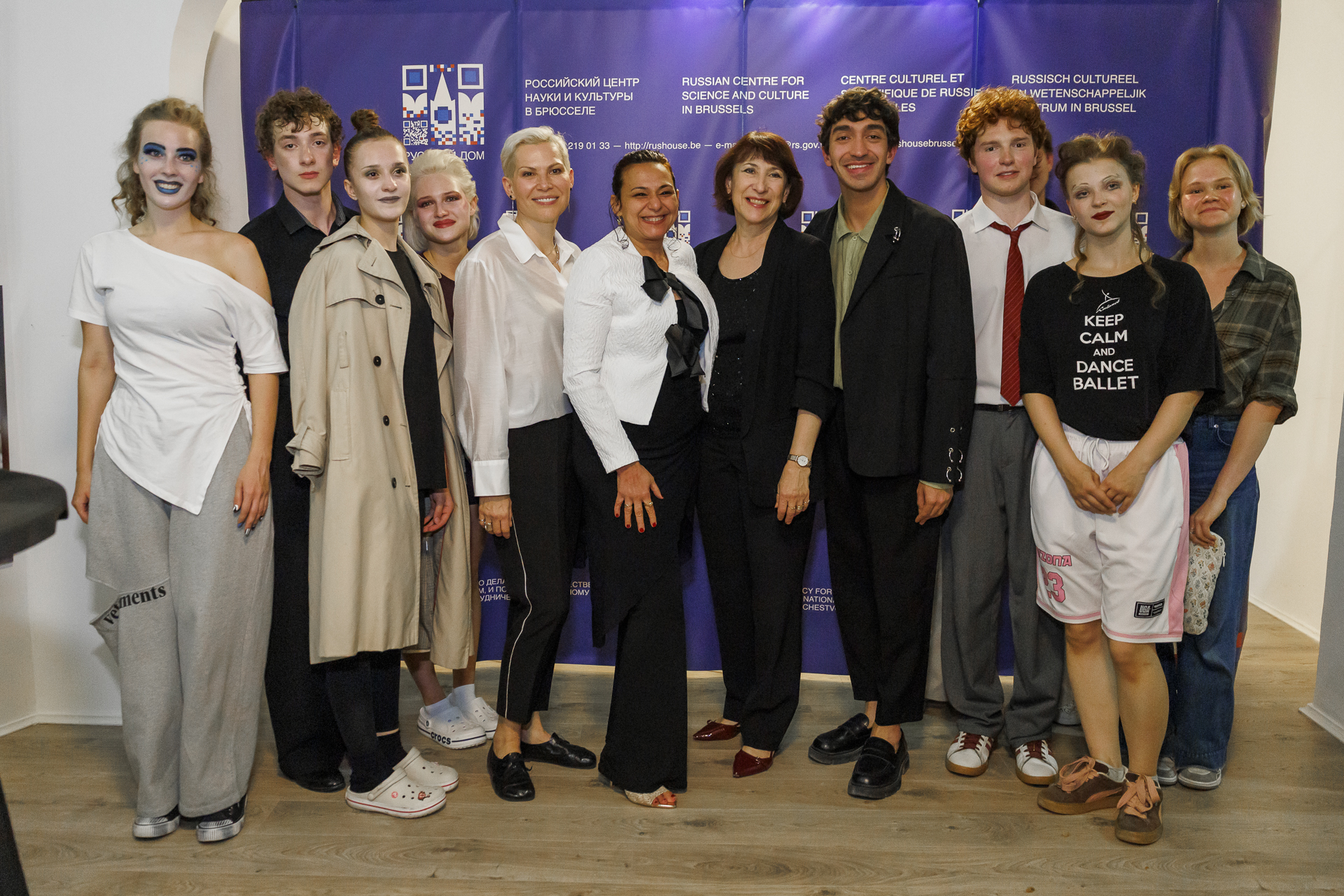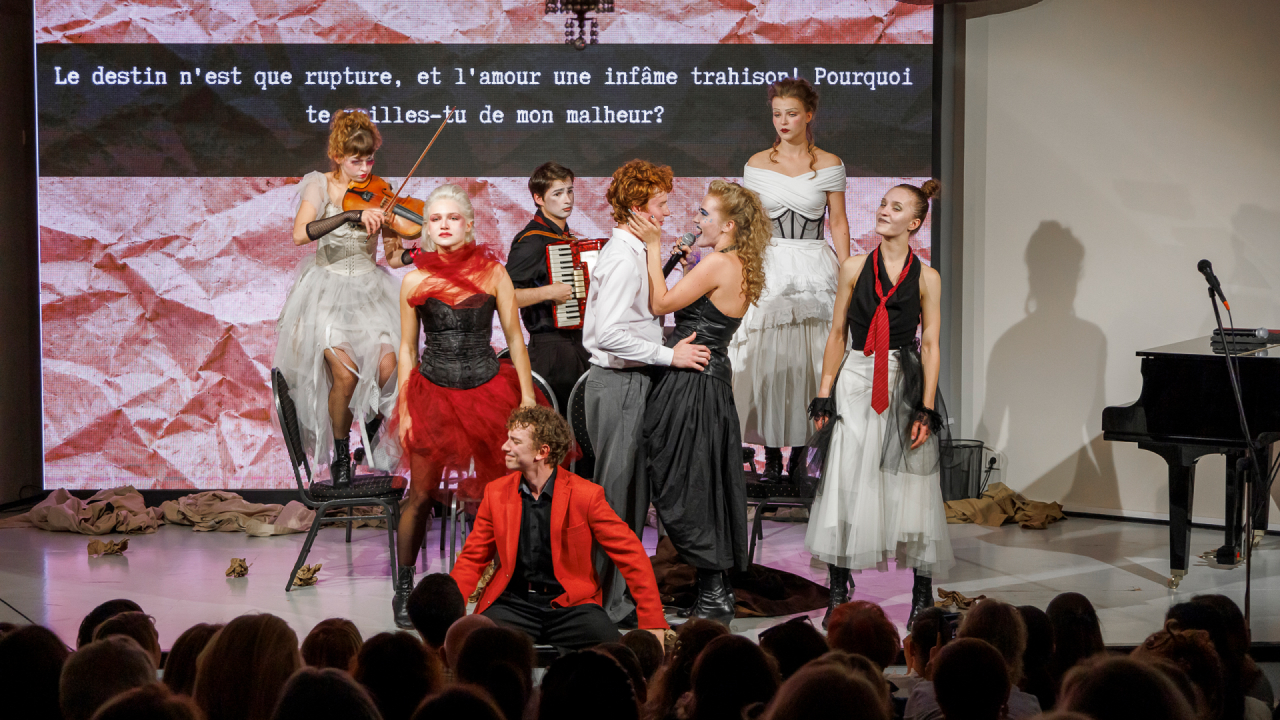
On September 24, the premiere of the musical drama performance The Vagabond by the Russian Institute of Theatre Arts — GITIS took place on the stage of the Russian House in Brussels. The production by third-year students brought together dramatic art, music, vocals, choreography, and the poetry of Sergei Yesenin.
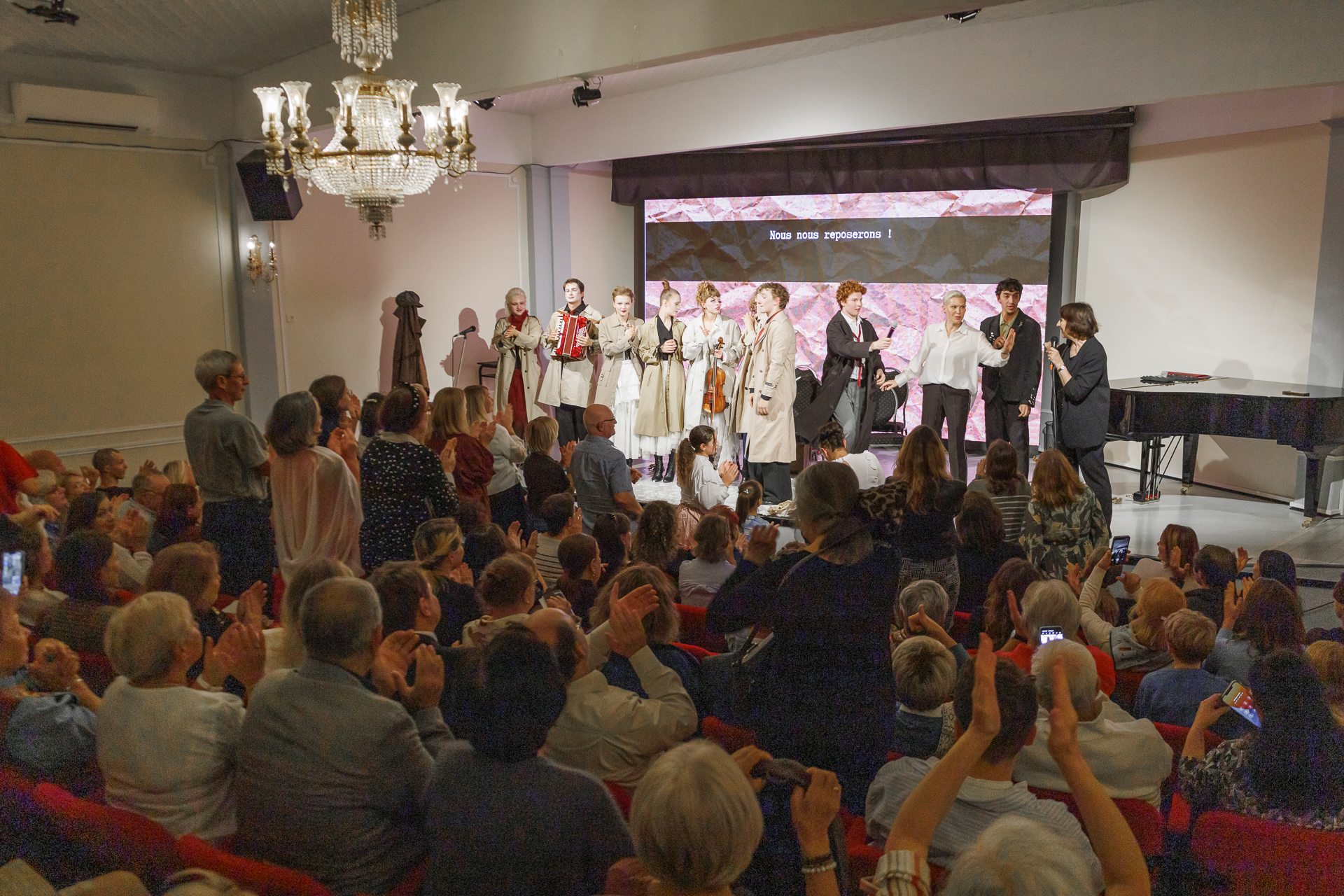
More than 200 spectators gathered at the Russian House that evening to see the performance, created based on the poem The Black Man, Yesenin’s poems, and personal letters. The performance was timed to coincide with the 131st anniversary of the poet’s birth and became the first event of the new season of the Russian House in Brussels.
At the centre of the production is the story of a man left alone with his memories, feelings, and inner contradictions. The plot unfolds in the space of the Beryozka tavern, where the present gradually intertwines with the past, while the image of the Black Man becomes a reflection of the protagonist’s inner state.
A special place in the performance is given to vocals. The musical numbers are not merely an accompaniment to the dramatic action — they become an independent expressive tool and continue the stage story where ordinary dialogue is no longer sufficient. Rock compositions and lyrical songs allow the performers to reveal the emotional states of the characters, work with timbre, intonation, and rhythm, while preserving the dramatic nature of the performance.
For the GITIS students, the production became a serious professional challenge: the performers had to work simultaneously with literary text, dramatic material, vocals, physical expression, and musical rhythm. This combination of different performing disciplines reflects the specifics of the Russian theatre school, in which an actor is regarded as a universal stage performer capable of existing in different artistic forms.
In The Vagabond, traditional work with the poetic word is combined with a contemporary stage language. Yesenin’s text is heard accompanied by a live musical element, accordion, and choreography, forming a unified space of the performance. As a result, classical poetry receives a new stage interpretation while retaining its emotional and figurative power.
An important part of the production was also the acting work of the young performers. The students not only play roles, but also exist in the performance as participants in a unified musical and dramatic ensemble. They are required to be precise in their work with the text, their partners, movement, and music, as well as to maintain a complex emotional line throughout the entire performance.
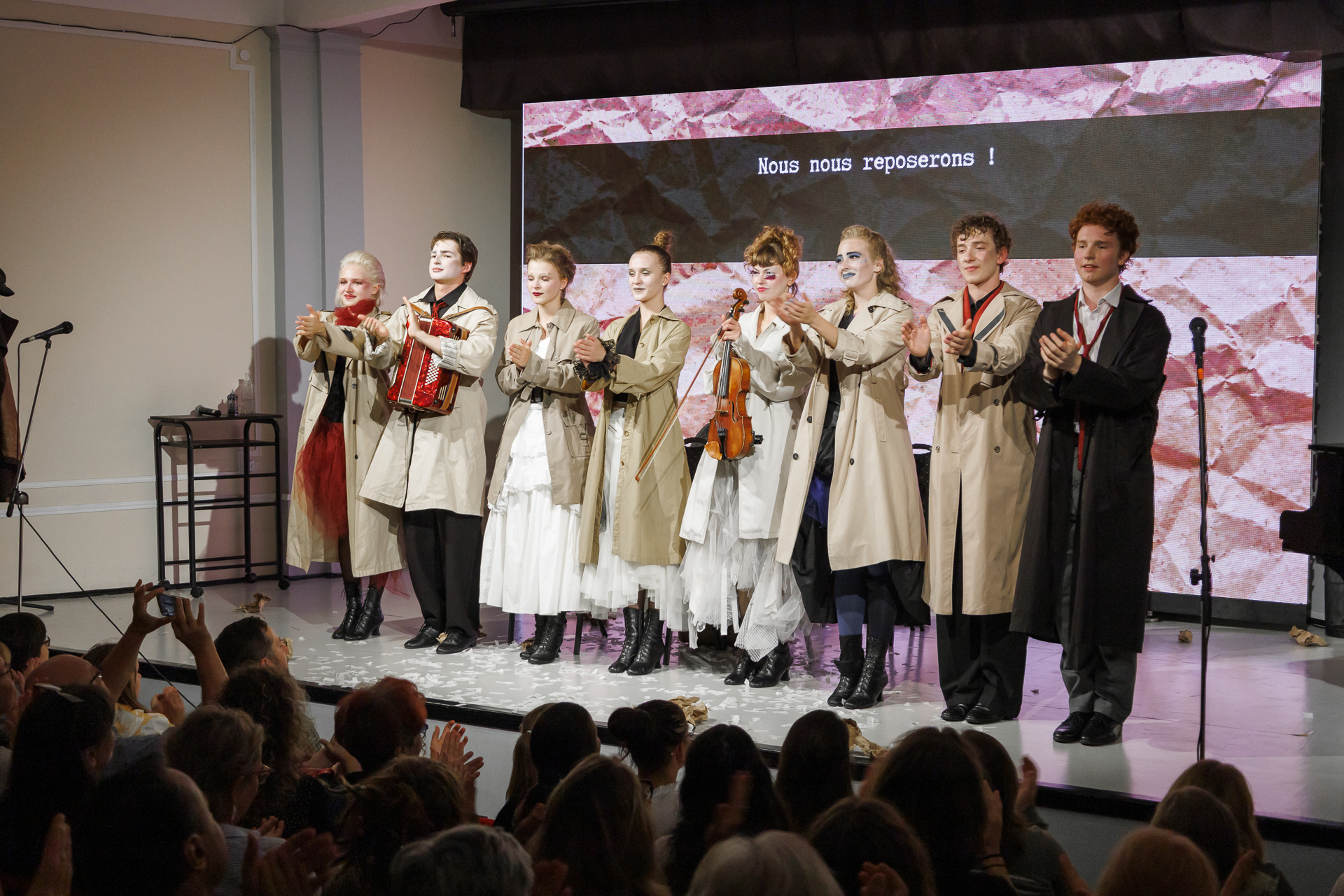
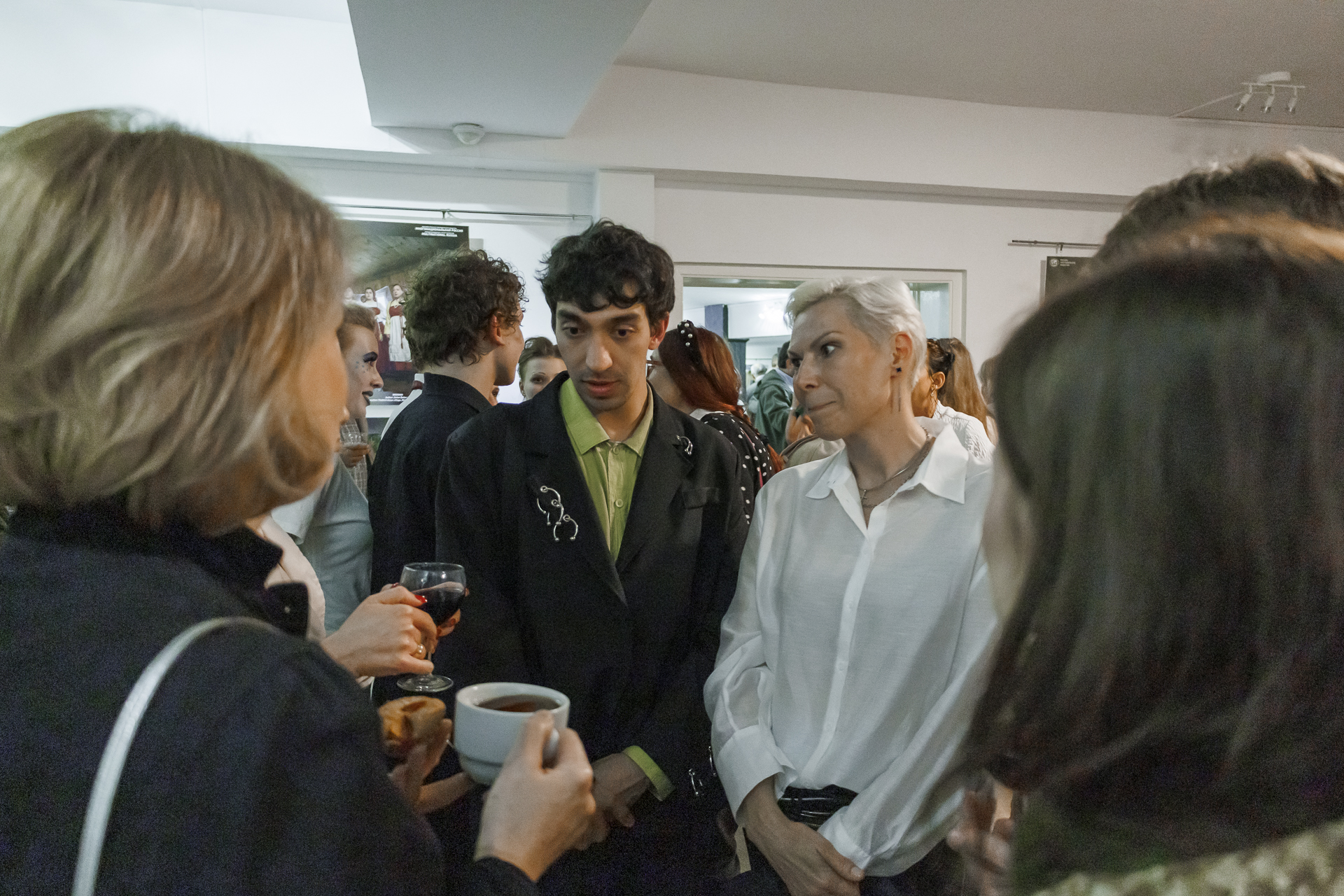
The premiere received a lively response from the audience. Among the spectators were representatives of the Russian-speaking community and the Belgian audience. After the performance, spectators noted the combination of Yesenin’s poetry with a contemporary theatrical form and the variety of expressive means used by the young performers.
The presentation of The Vagabond gave GITIS students an opportunity to present the results of their professional training in Brussels and to introduce an international audience to the distinctive features of the Russian acting school.
Artistic Director — Lika Rulla.
Stage Director — Ruslan Oskanov.
Choreographer — Elizaveta Kugay.